
Reverse Mentoring for Inclusion Programme
We are delighted to be launching the 7th cohort of our Award winning Reverse Mentoring for Inclusion programme. Open to all LLR ICS partners and Northamptonshire NHS colleagues for 2026.
We have run 6 cohort programmes so far with delegates successfully graduating from the programme. Feedback has been overwhelmingly positive with many delegates stating that this has been a life changing programme.
Watch the video below to find out more about the Reverse Mentoring For Inclusion programme.

We have had great success with the first six programmes running between 2018 and 2025.
There is growing evidence nationally that appropriately done, this approach helps deliver some of the inclusion, leadership and culture change needed within the NHS and local authority organisations. There is no doubt that our LLR wide programme has had a great impact, and we are excited to be extending it to Northamptonshire NHS colleagues for 2026. Please see the testimonials at the end of this page as a proof of the success of our programmes.
The 2026 programme sets out to address race, disability, LGBTQ+ and gender issues. However, we do encourage our reverse mentors to share their lived experiences across a range of equality characteristics that they may have. This is a great opportunity for colleagues to share their lived experiences with leaders across the system to challenge preconceptions and tackle unconscious bias. It’s also a fantastic way of growing cultural and inclusive competencies of our workforce that has a direct benefit for our patients and those trying to access services.
What is Reverse Mentoring for Inclusion?
Reverse Mentoring For Inclusion turns traditional mentoring on its head. The reverse mentor may be a junior colleague who would mentor a more senior colleague. For example, a colleague from an ethnic or cultural minority background, or LGBTQ+ colleague, at a lower grade would mentor a colleague who is an Executive Director from a different ethnic group, who doesn’t have a disability or may not be LGBTQ+. They would meet with the Director, share their experiences and perspectives, and may accompany them to meetings, observe behaviours, and provide constructive feedback.
However, our learning from last six cohort programmes has also found that Reverse Mentoring For Inclusion can also work between colleagues who are on the same grade or band or even where the colleague Reverse Mentoring For Inclusion might be more senior than the mentee. Our programme is therefore versatile to maximise the learning opportunities within our system. We want to welcome applications from all sections of the workforce.

Who is it for?
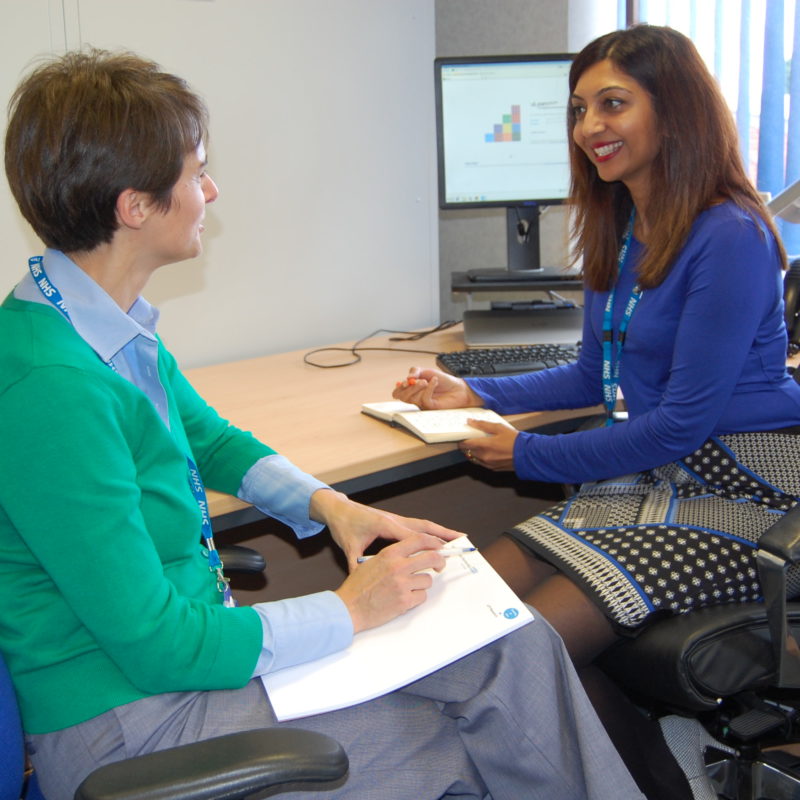
We are looking for a good cross-section of staff willing to be either Reverse Mentors or Mentees from across all our partner organisations. Reverse mentors would ordinarily be junior members of staff. However, anyone is welcome to apply.
A Reverse Mentor must be eager to support colleagues from across the LLR/ Northamtonshire system. You must help the Reverse Mentee discover their strengths and weaknesses to focus them on their own personal development specifically linked to inclusion.
As a Reverse Mentee, you must be committed to the principles of Reverse Mentoring For Inclusion. Be willing to listen and understand the role of the reverse mentor.
Applications for our 7th Cohort (2026) are now open
Testimonials
I would thoroughly recommend the reverse mentoring programme; it is well organised, supportive and really helpful in allowing participants to think differently. The programme has helped me to observe colleagues’ behaviours through a different lens as well as be more reflective of my words and actions. I believe that it has benefited my team, the organisation and most of all me, as it has challenged my thinking and assisted me on a journey of more cultural competency and compassionate leadership.
I have enjoyed the reverse mentoring process. At times it was difficult as I had to show my own vulnerabilities when sharing my own lived experiences. However, my mentee’s reaction was authentic, compassionate, and emotional at times. This was just the outcome I had hoped for.
Would I recommend reverse motoring, absolutely it’s a journey of discovery and can only lead to greater connection and understanding. Which I sincerely hope reflects in the way we care for our patients.
I put myself forward for the reverse mentoring programme because I was so shocked by George Floyd’s death and the groundswell protest in the USA. It made me wonder what the life experiences of British BAME are and I am more than a little embarrassed to say, I didn’t know.
Reverse Mentoring experience has been an emotional rollercoaster for me. It was a truth, or rather many truths, that the mentor gently, but tenaciously steered me towards. I can only thank her for giving her time to help me on this journey.
I have completed my reverse mentoring sessions and my mentee has been brilliant. His journey has been eye-opening and today he gave a presentation to his managers about the programme highlighting what he had learned from the course. We’re keeping in touch even though the programme has now finished.
I’ve also learned so much about how willing people are to change their views and undertake the growth needed to develop their understanding of underrepresented groups, with the right tools and support.
I would love to be considered for the next round of mentoring as it was great to have a mentee and I would take a lot of satisfaction being part of someone’s journey once again.
Personally, the programme strengthened my self-awareness, confidence, and emotional intelligence, helping me move from adapting to change toward influencing it positively. For my team, it inspired me to promote psychological safety, inclusion, and open dialogue, ensuring that diverse voices are valued in everyday practice and service development. The programme reinforced the value of courage over comfort and strengthened my emotional intelligence in listening and leading with empathy.
Resources
Reverse mentoring for inclusion resources are available for delegates on the programme and other interested colleagues. If you have a suggestion to add to these resources please email us at llr.academy@nhs.net